Dolphin Rescue and Release
Nobody knows for sure why dolphins strand themselves. Some think it has to do with the shape of the bay. The gently sloping sand can fool the dolphin’s echolocation. Others think it may have to do with illness, or navy sonar, or tidal interactions. What is sure, however, is that dolphins occasionally take a wrong turn and end up on the beach. If the leader of a pod beaches, then the rest of the pod is likely to follow. That is just what happened this April in Wellfleet harbor on Cape Cod. Six Atlantic White-Sided dolphins stranded themselves on a shallow sand bar and couldn’t get off. Lucky for the dolphins Sietch members were on the scene to help out. Working with the Cape Cod Stranding Network and AmeriCorps Cape Cod, Sietch members were able to rescue six dolphins.
Of the six dolphins there were several large males and females, including a mother and calf. Dolphins are incredibly strong creatures weighing hundreds of pounds.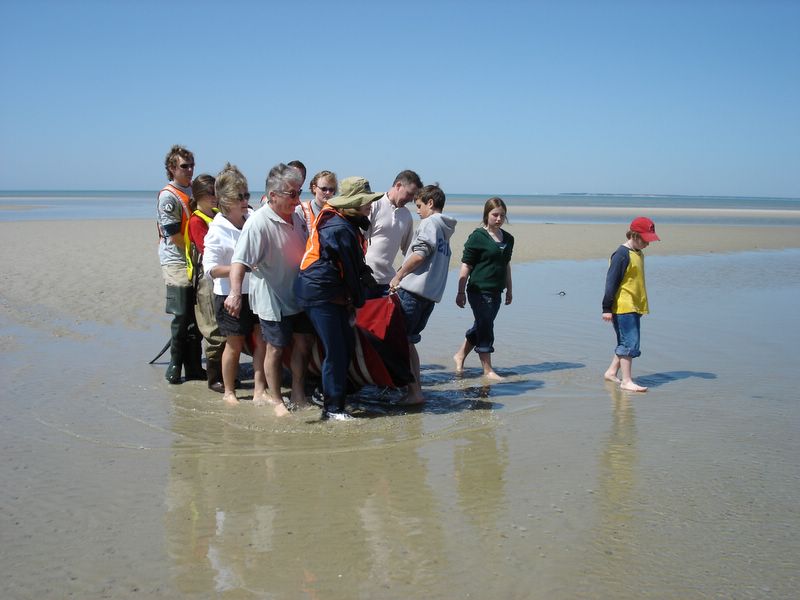 That is why so many volunteers are needed to help transport them. They are also sensitive creatures that require a delicate hand. They can become stressed out and go into a dive response; they hold their breath and induce a lot of stress on themselves. This can lead to death if the dolphin is not calmed down. For this reason, one volunteer is assigned to monitor each dolphin and keep track of the heartbeat and breathing. If the dolphin is showing signs of stress, the volunteer can make sure bystanders do not come too close or make too much noise. Once each dolphin is shown to be in good health, it is ready to be moved to another deeper water location for release.
 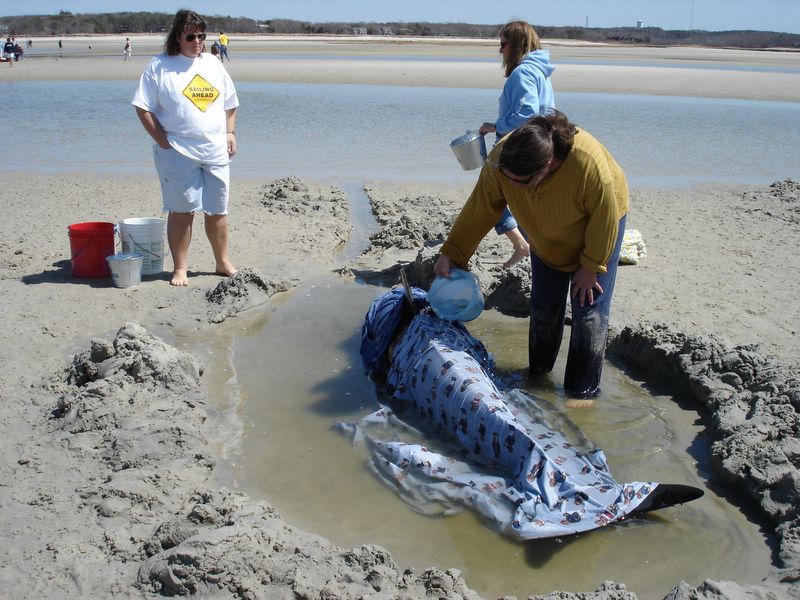 Dolphins are social animals. If a single dolphin is beached, even if that dolphin is healthy, it will most likely die when released. Dolphins need each other for survival. It was lucky for us that all six dolphins, even the calf, were in good health and could be returned to the wild.
 Did I mention that dolphins are heavy? It took ten of us to move some of the larger dolphins. Using specially designed stretchers, we moved the dolphins one at a time into special trucks. We were racing against the tide. We wanted to get all the dolphins to deeper water on the other side of the Cape so that they would not just run right back into the shallow sand bar. We pulled the last dolphin out just as the tide had risen to our waists.
Volunteers rode with the dolphins, keeping them cool 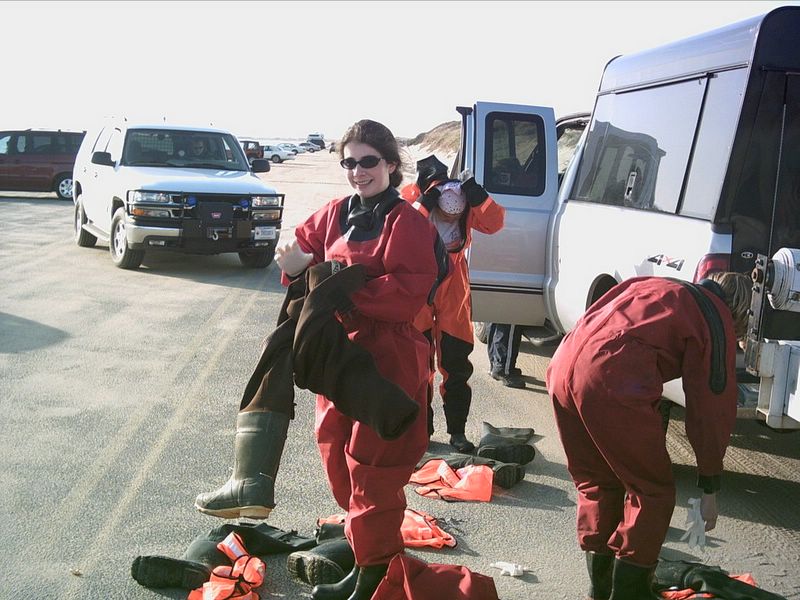 and calm all the way to Provincetown Harbor where the deep Atlantic Ocean waters waited. The water was frigidly cold, so we donned some special dry suits provided by the Cape Cod Stranding Network.
When we arrived the ocean was calm and peaceful. We quickly moved the dolphins to the beach and put them all in a line. We wanted to release all of the dolphins at once so that some of them would not be tempted to swim back towards the shore and re-strand. One dolphin was then fitted with a tracking device so that we could monitor the pods location.
We didn’t have enough people to move all the dolphins in at once, so the plan was to put in half and then run back up the beach to put 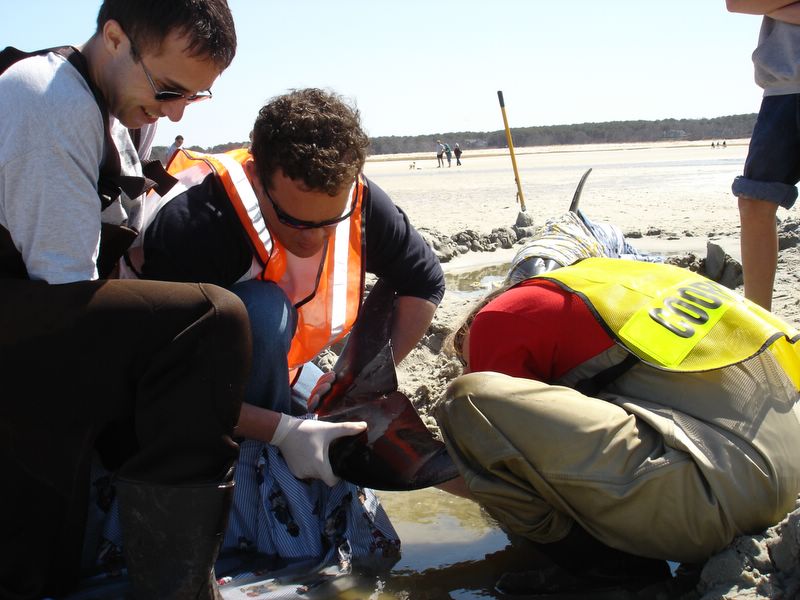 in the other half. We wanted to move as quickly as possible so that they dolphins would have as little stress as possible. At this point they had been out of the water for the entire day. As luck would have it, as soon as we started to move the first group of dolphins into the water the ocean started to get a bit choppy.
When standing up to your waist in cold Atlantic water with a 600-pound dolphin in your hands, the last thing you want is to be smashed into by a huge wave. The dry suits kept us dry 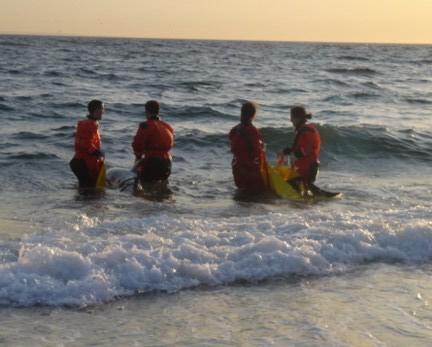 right up to the neck. When the water hit your face, it was invigorating, to say the least. As the waves rose the dolphins got the urge to swim away. It’s hard to hold back a huge dolphin as freezing cold water is smashing into your head. So at this point we simply had to abandon the plan and let some of the dolphins go early. This precipitated a mad dash back up the beach to gather up the rest of the dolphins and release them as soon as possible.
After exhausting ourselves to get all the dolphins out to sea, we stumbled back onto the beach to the thunderous applause of the bystanders. It was like being in some sort of rock show or movie. I can honestly say it was one of the most taxing and exhausting things I have ever done, but at the same time one of the most rewarding as well. Members' backs were sore for days, but the news that the dolphin pod had not re-stranded and was tracked into the deep Atlantic waters made it all worth it.